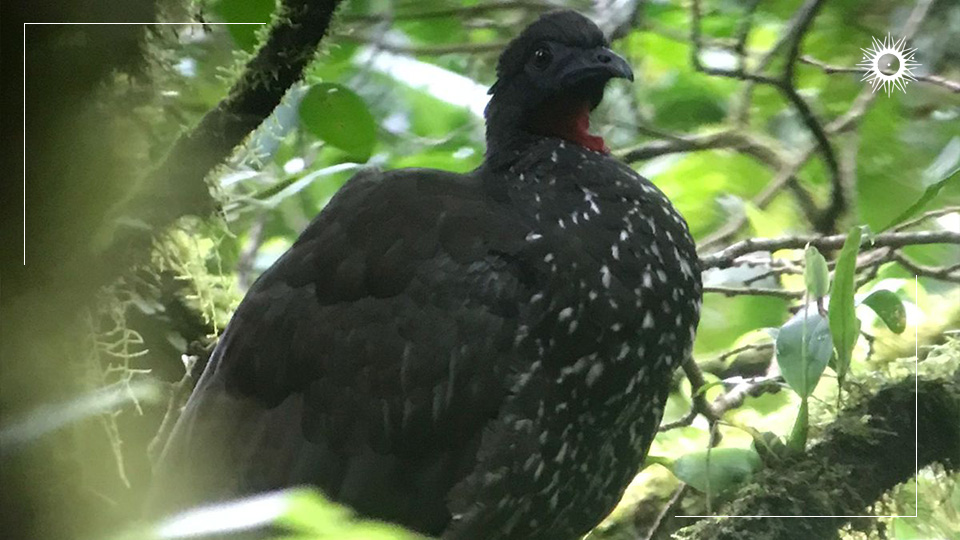
Black-faced Solitaire
A cloud forest specialist known as much for its haunting song as for the challenge of spotting it among dense vegetation.

Dennis Fernández, 29, has been leading birdwatching tours in Monteverde for six years. Dennis says some 10,000 bird species are believed to exist in the entire world, and in Costa Rica there are said to be some 923. That means that out of roughly every 10 bird species in the world, one probably lives in Costa Rica.
Dennis, who often leads tours for guests from Monteverde Lodge & Gardens, said he has seen four ocelots in his time here. But when you ask him about birding, that really gets him talking.
Among the endemic species here, Dennis mentions the black-faced solitaire, collared redstart, purple-throated mountain-gem, coppery-headed emerald, slaty-backed nightingale thrush and elegant euphonia.
“Endemic” means these birds are found only here, and perhaps in Panama, he said. And of course, he’s seen them all.
A cloud forest specialist known as much for its haunting song as for the challenge of spotting it among dense vegetation.
A lively regional specialty often seen moving actively through mossy forest understory.
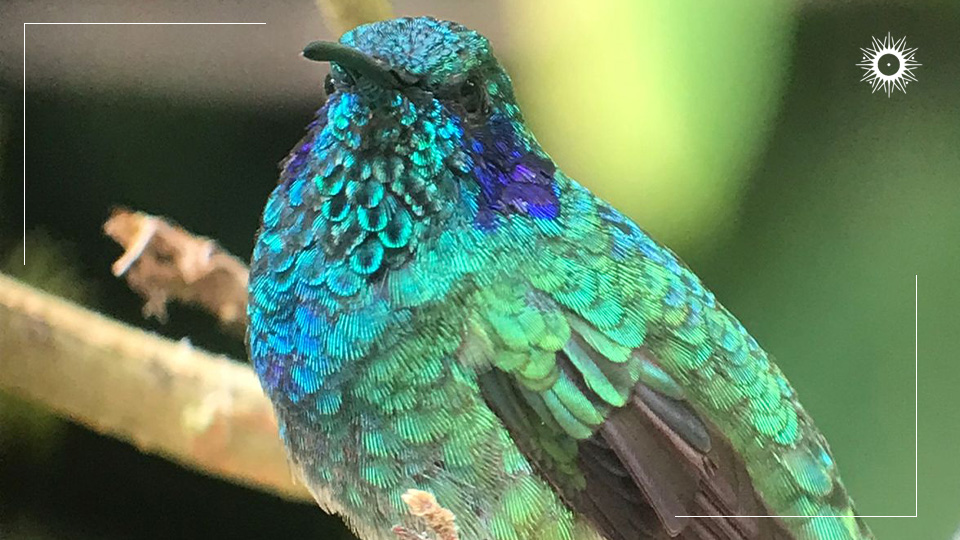
A hummingbird closely associated with Costa Rica’s highland forests.
One of the brilliant hummingbirds that gives Monteverde its reputation among birders.
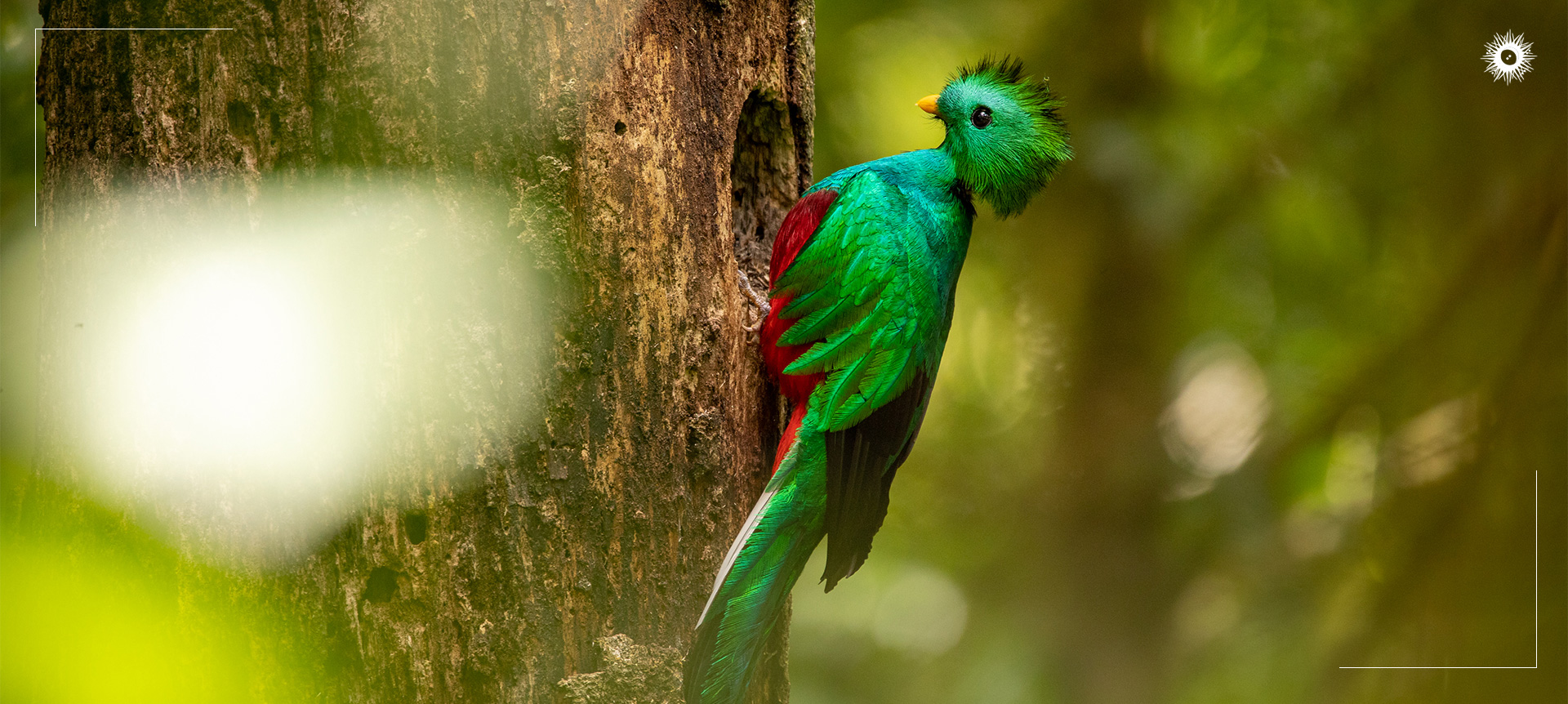
The resplendent quetzal is a type of trogon with iridescent green feathers, a red belly and an extraordinarily long tail. Worshipped by ancient Mesoamerican cultures and celebrated as Guatemala’s national bird, it remains one of the most sought-after sightings in the cloud forest.
You won’t see quetzals in cages, because they die in captivity. Their presence depends on intact forest and the natural food sources found within it.
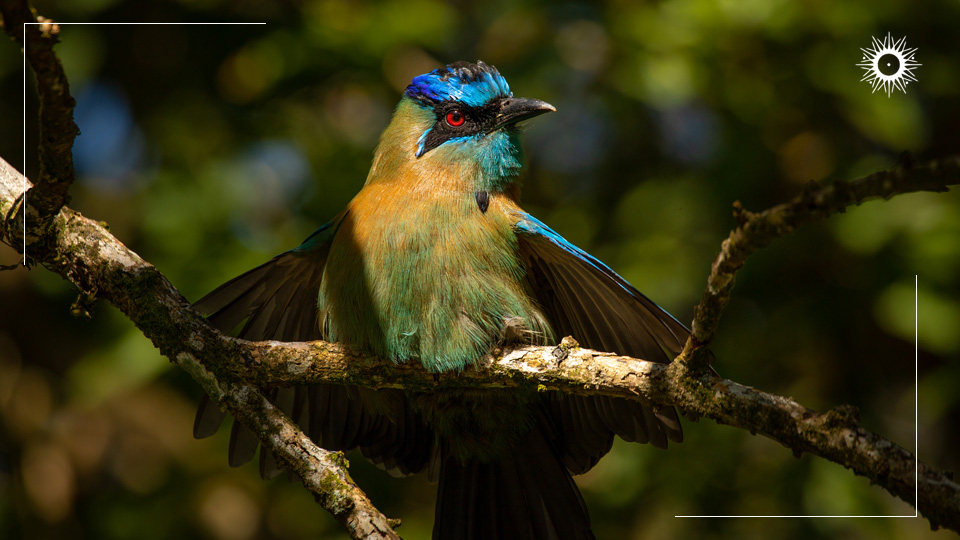
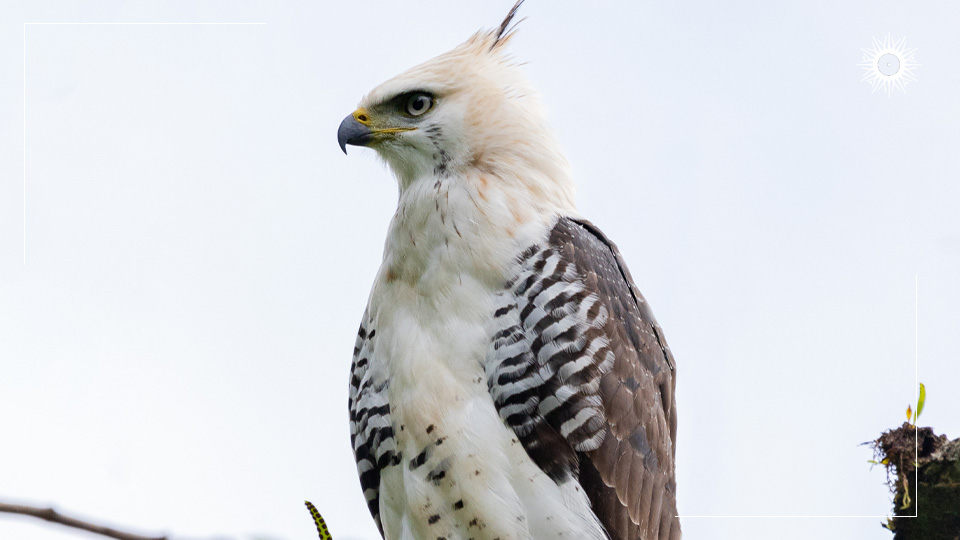
About 30 of the birds you can see at Monteverde are hummingbirds. Other species spotted here include the rare three-wattled bellbird, the orange-bellied trogon, the keel-billed toucan and the blue-throated goldentail.
Dennis says some 460 bird species have been “registered” in Monteverde, meaning spotted and positively identified — although he stressed that this represents a very low estimate of all the species that exist here.
One commonly cited statistic is that Costa Rica has only 0.03% of the world’s land mass, but 5% of its biodiversity. In other words, of every 20 animal species in the world, one lives in Costa Rica.
Among the rarest birds Dennis identifies are the silvery-fronted tapaculo, the wrenthrush, the black-and-yellow silky-flycatcher and the fairy-throated hummingbird.
And regarding one enduring question: Dennis says he has never seen a hummingbird walk. If a hummingbird wants to move one inch down a twig, it simply flies.
Monteverde does not have a national park, but it has several nature reserves known for birdwatching. Guided tours can be reserved at each one, though independent visits are also possible.
The region’s most famous protected area and one of the world’s iconic cloud forest destinations.
A misty highland reserve with extensive forest trails and panoramic viewpoints.
A favorite birding location known for varied habitats and strong wildlife visibility.
Monteverde is a fascinating place to visit for many reasons, including its unusual history. The area was developed by Quakers from Alabama seeking to escape the peacetime draft in the late 1940s. Eleven families of Quakers, who call themselves Friends, bought 1,400 acres in these mountains and came here by air, sea and land in 1951. Back then, the journey by land took three months.
Seeking a way to earn money, they founded the Monteverde Cheese Factory in 1952. Monteverde remains famous for its cheese, but the Quakers’ greatest contribution was founding the Monteverde Cloud Forest Reserve in 1972.
A cloud forest is a high-altitude tropical rain forest that is usually shrouded in mist — essentially ground-level clouds. A guide once described it as the richest habitat in the world, with extraordinary concentrations of biomass and life.
Cloud forests are chilly and wet. Bring warm clothing, comfortable closed-toe shoes and rain gear.
Wildlife encounters are safest when animals and insects are admired from a respectful distance.
The worst thing that happened on one of Dennis’ birdwatching tours was when somebody decided to touch a tarantula hawk wasp.
“I could see tears in his eyes,” said Dennis. “He had to go to a clinic.”
Normally, however, nothing bites on the birdwatching tours out of Monteverde Lodge. In fact, this may be your best chance ever to see any number of tropical birds on your lifetime wish list.
Some sightings arrive in a flash of color. Others begin with a distant call, a movement in the mist or the patient guidance of someone who knows exactly where to look.
That uncertainty is part of the magic. No two walks are alike, and every morning in the cloud forest offers another chance to discover something extraordinary.