
Some places inspire creativity in unexpected ways. At Lapa Rios, nature, light, and texture come together to create an atmosphere that invites observation and artistic expression. Visual artist Diana Terán experienced this connection firsthand during her stay, where the energy of the rainforest and the ocean inspired her latest work — a unique piece created on a repurposed surfboard.
We spoke with Diana about her experience, her creative process, and the inspiration she found in the Osa Peninsula.
Interview with Diana Terán
As a visual artist, what was the first thing that caught your attention when you arrived at Lapa Rios? Was it the light, the jungle colors, the ocean, the textures? Tell us a bit about it.
The first thing that caught my attention was how the hotel blends into nature, but also the sobriety and elegance of the spaces — the design, and the play of light and shadows. You feel like you're in paradise because the architecture doesn’t obstruct anything, so you feel integrated, or rather, almost dissolved into nature.
Another thing that caught my attention was the gradient of greens and the contrast with the tones of the ocean. I’m drawn to water — the sea is my element — and the place allows you to appreciate those colors, as well as enjoy the different types of waves and beaches. You find everything: waves for surfing, spaces to relax, fossilized rocks that look like natural sculptures. In short, I think it’s a place that tells you where to point your lens and when to press the shutter.
You arrived at Lapa Rios during a full moon, right? How was that experience?
Surprisingly, I learned that the day after my arrival I would witness the March red moon — the blood moon. It required an extra effort, but it was worth it. We woke up at 2:30 in the morning and drove for about 40 minutes until we reached a beach where we had the privilege of witnessing a wonderful spectacle: a huge moon setting over the ocean.
The moon slowly disappeared, and as it was setting, the sunrise began. It was magical. I used that session to take both figurative and abstract photos, guided by a deep feeling of peace.
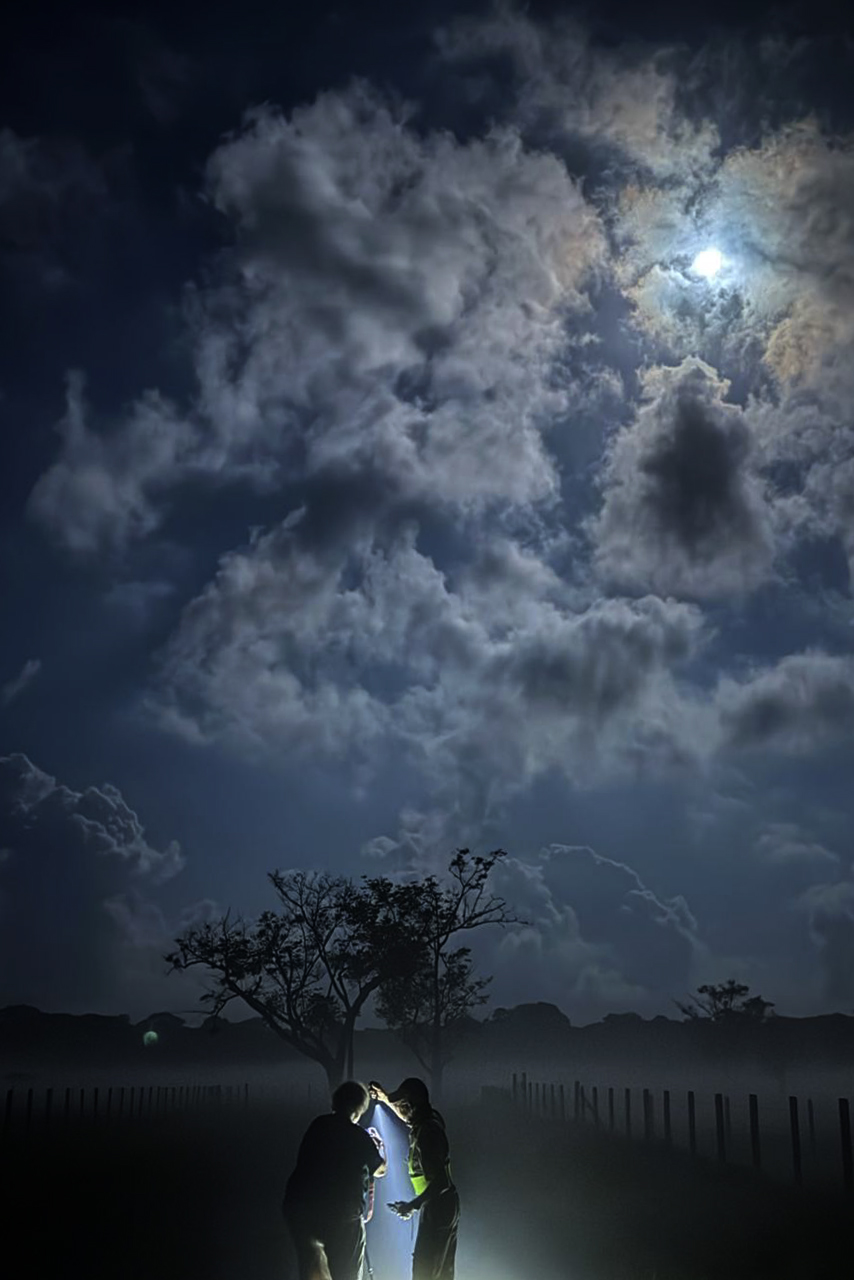
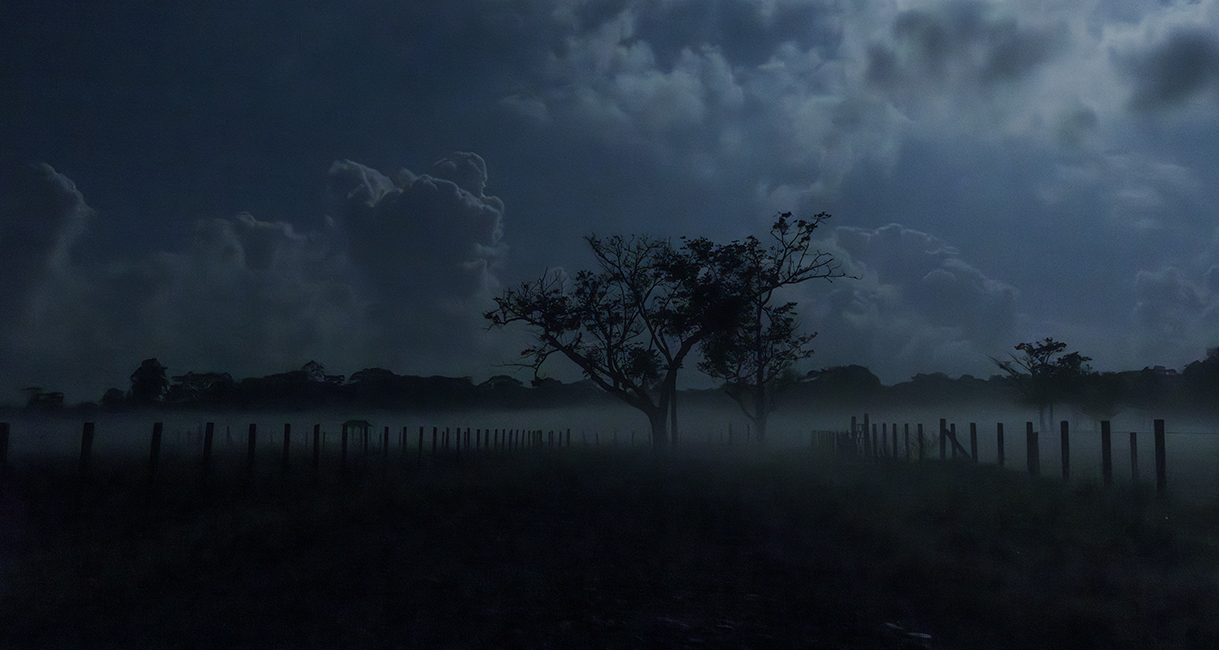
On the way to the beach, something else happened. I asked to stop because I saw a band of night mist forming a composition with the road, a tree in the middle, and the early morning sky behind it. Everything formed a spectacular and mysterious scene. Frank, the guide, helped illuminate me, and Luis captured the photo of the process. The result was magical.
We understand you’re preparing a special piece for Lapa Rios. What is it about?
I must confess that from the very first moment, the energy of the place captivated me. The goal of my work is to help others perceive what they might feel when contemplating this place.
I’m not only referring to the privilege of being in a lodge surrounded by primary rainforest, but also to the possibility of mentally traveling thousands of years back in time, to when this jungle began to form. All of this fills you with a very pure energy.
What inspired you to create your work on a surfboard?
After doing some research, I concluded that I could reuse discarded surfboards and transform them into art, so they wouldn’t become waste, while also raising awareness about the natural beauty of our country.
Each board needs to be studied. I test and see which photo fits best with its shape. On the back, I leave the board as it is, with the original raw wood, while on the front I go through a series of processes to create the artwork. The board is polished, imperfections are removed, and a surface is created where the photo can be applied. Then, an automotive lacquer is applied to give the final finish and create what I call “fine art photography on a repurposed surfboard.”
If you were to return to Lapa Ríos tomorrow, what would you photograph first?
I would love to return to photograph animals, both in the jungle and in the ocean. I know wildlife is there — it’s just a matter of having the time to look for it and letting myself be surprised by its beauty.
To achieve this, I would also take the opportunity to visit Corcovado National Park, which is located nearby.
Finally, what would you tell an amateur photographer traveling to Lapa Rios Lodge? What should they prepare to take great photos?
First, immerse yourself in the space — let yourself be guided by it. Second, observe and be patient. It’s not about the number of photos we take, but about capturing that one image that conveys what we feel.
Like all art, photography is subjective, and what amateur photographers must learn is how to convey their feelings — how they perceive other beings, spaces, and everything around them.
In short, artistic photography requires patience, observation, and inspiration — or simply allowing yourself to flow with the environment. And Lapa Rios must be one of the best places in the world to achieve that. Without a doubt.